Depuis plusieurs années, l’AITEC, Next Planning & leurs partenaires oeuvrent à la création d’un espace d’échanges, de mutualisation et d’articulations entre des mouvements d’habitant·es, chercheur·es et professionnel·les engagé·es. Dans la continuité des rencontres passées et actions réalisées, en particulier le soutien au tour de France de la coordination Pas Sans Nous, nous proposons d’impulser une nouvelle dynamique avec l’objectif de :
renforcer notre espace d’échanges, de mutualisation et d’articulations entre mouvements d’habitant·es, chercheur·es et professionnel·les engagé·es.
construire une boîte à outils au service des mouvements d’habitant·es engagés dans des démarches de recherche-action
choisir des thématiques et des lieux d’expérimentation pour mettre en œuvre des réalisations concrètes et approfondir nos propositions.
définir une stratégie pour les plaidoyers basés sur nos propositions citoyennes
Nous vous invitons à participer à deux jours de rencontre le week-end du 19 et 20 novembre 2022 à Paris et contribuer à la préparation de cet évènement.
Pour préparer ensemble cette rencontre, nous vous proposons plusieurs réunions préparatoires -le mercredi 12 octobre entre 12H30 et 14h. -le mercredi 19 octobre entre 12h30 et 14h -le mardi 25 octobre entre 11H et 12H30 ( lien Zoom https://us06web.zoom.us/j/87607453324)
14h15 : Rappel de la démarche et des objectifs de la rencontre : renforcer notre espace d’échanges, de mutualisation et d’articulations entre mouvements d’habitant·es, chercheur·es et professionnel·les engagé·es.
14h30 : Tour d’horizon, partage des pratiques et expériences des participants et présentation des luttes et alternatives dont les Tables de Quartier, des mouvements d’habitants face à la rénovation urbaine, la lutte contre l’habitat insalubre, l’habitat participatif et les coalitions pour le droit au logement et à la ville (45mn)
15h10: Choix des groupes
15h15 : Groupes d’interview Mutuelle
A partir des expériences présentées, dans quelle mesure la recherche et l’expertise rentre en compte dans les luttes et la construction d’alternatives des mouvements d’habitants ?
A quel moment, ces liens avec l’expertise et la recherche sont intervenus ? Et comment (éthique, financement…)? Quels ont été effets individuels et collectifs ?
Quels sont les besoins de recherche et d’expertise pour soutenir les mouvements d’habitants ?
16h : Restitution (30mn)
A partir des expériences, dégager des outils, besoins de mobilisation et proposition d’expérimentation.
PAUSE (15mn)
16h45 : 3 Ateliers : outils, mobilisations et expérimentation locale en soutien aux mouvements d’habitant-es
L’objectif est d’élaborer des solutions concrètes sur des projets précis examinés par des groupes de travail formés de militants de quartier qui font face à des difficultés et des chercheur.e.s ou autres professionnel.les ayant rencontré ces problèmes et réfléchi à des processus de renversement des situations de blocage (outils juridiques, interpellations, capacitation…)
A.Quels “outils” et “positions” pour que la recherche et l’expertise puisse soutenir les mouvements d’habitant.es ?
B.Des projets d’aménagement imposés aux mobiilisations des habitant.es ? * Lanceurs d’alerte, éducation populaire, communication…*
C. Proposer des thématiques et lieux d’expérimentation pour mettre en œuvre des réalisations concrètes.(en partant par exemple des propositions du manifeste Pas Sans Nous à faire vivre et d’autres initiatives)
17h30 : Restitution des groupes de travail
Nous partirons des restitutions dans les débats du lendemain.
19h/20H : moment convival, repas, soirée.
DIMANCHE 20 Novembre 2022 (10h-13h)
10h-13h : Assemblée citoyenne ouverte **Construire un agenda commun et définir les stratégies de plaidoyer avec les mouvements d’habitants »
Objectif : à partir des échanges du samedi, définir le programme de l’espace d’échanges, de mutualisation et d’articulations coonstruit avec les mouvements d’habitant·es, chercheur·es et professionnel·les engagé·es.
13h : Repas
14h : Balade urbaine (à définir)
Logistique
Lieu : Le Phares. 6 rue Arnold Géraux. 93450 L’Île-Saint-Denis.
Transport : à la charge des participants. Possibilité de demander une aide à une caisse de solidarité.
Transport à Paris : jusqu’au PHare: Métro / RER / Bus (détailler)
Repas : prévoir 10euros par repas. Merci de prévenir à l’avance vos besoins (samedi soir, dimanche midi). Possibilité de repas végétarien.
Logement : à la charge des participants. Possibilité d’hébergement solidaires (?), auberge de jeunesse (?) Hotel CAMPAGNIL A ST DENIS (voir Pas Sans Nous pour Tarif)
Si besoin hébergement vendredi soir : Hébergement sur la PENICHE (JUVISY) + Hebergement Solidaire
Possibilité de demander une aide à une caisse de solidarité.
Se réapproprier le Droit à la Ville par la Communalisation
Déclaration de la PGDV à l’occasion de la Journée Mondiale pour le Droit à la Ville (31 octobre 2022)
Nous, organisations de la société civile et des gouvernements locaux, appelons à la réalisation du droit à la ville, à travers la mise en œuvre de pratiques de communalisation.
Comme souligné lors de la Journée Mondiale de l’Habitat, les inégalités croissantes constituent un obstacle évident à la concrétisation des droits humains et à la réalisation de villes et d’établissements humains justes, diversifiés et pleinement accessibles à tous et toutes. La lutte contre ces inégalités, dans leurs dimensions intersectionnelle et spatiale, devrait être la priorité absolue de tous les programmes gouvernementaux. Pour cela, il est urgent de repenser en profondeur les modèles actuels du développement économique, passant d’une logique basée sur la maximisation des profits et la marchandisation des ressources clés à des modèles qui favorisent la mise en commun pour le bien-être de nos communautés.
La création, la protection et la gestion partagée des biens communs et de leurs bénéfices (avec ou sans implication de l’État) gagnent en légitimité et en force grâce à des initiatives à travers le monde. Ces initiatives sont une réponse et une opposition claire aux tendances à la privatisation et au profit et à la concentration croissante du pouvoir et des ressources. Entendus à la fois comme ressources (matérielles ou immatérielles) et pratiques sociales, les Communs sont au cœur du nouveau Droit à la Ville et des mouvements et agendas municipalistes. En tant que stratégie, les pratiques des communs sont des outils concrets pour mettre la fonction sociale et environnementale au-dessus de l’accumulation, de la privatisation et de la spéculation (à travers, par exemple, les fiducies foncières communautaires et les coopératives), garantissant un accès et des avantages égaux à tous et toutes. Elles représentent en même temps une opportunité prometteuse d’expérimenter de nouvelles formes de collaboration public-collectivité (prestation de services, équipements culturels, etc.) et de renforcer la démocratie directe et participative.
S’appuyant sur le leadership historique de la société civile dans la protection et la gestion des biens communs et dans la préparation du terrain pour des pratiques du faire en-commun, les gouvernements dans différents domaines peuvent jouer un rôle majeur dans la promotion de ces pratiques, à travers trois axes d’actions clés:
Respecter et faire confiance : donner aux initiatives de communalisation les espaces et les outils nécessaires pour qu’elles puissent se développer et éliminer les obstacles potentiels (juridiques, réglementaires, financiers, politiques, comportementaux);
Protéger : protéger les initiatives de communalisation (et les personnes impliquées) contre d’éventuelles blocages et représailles en cas d’adversité;
Réaliser : s’assurer que les pratiques de communalisation agissent effectivement comme des instruments pour atteindre plus d’équité et d’égalité. Le commun doit être intrinsèquement féministe, antiraciste, anti-validiste, anti-âgisme, intergénérationnel et aligné sur l’émancipation et l’autonomie des personnes traditionnellement marginalisées et exclues.
Il est essentiel de noter que l’engagement citoyen et la gestion sociale n’impliquent pas que l’État se retire de ses engagements et obligations en matière de droits humains pour lutter contre les inégalités structurelles. Au contraire, l’Etat doit garantir le maximum de ressources et un soutien continu. De plus, le soutien aux pratiques de communalisation devrait s’accompagner de formes de régulation qui favorisent l’essor de l’espace politique des communs, tout en freinant la financiarisation de nos villes et territoires issue des pratiques prédatrices du secteur privé, et en rééquilibrant progressivement les rapports de force inégaux entre les grandes entreprises multinationales et les communautés locales.
Par conséquent, en cette Journée Mondiale pour le Droit à la Ville, les organisations de la société civile et les gouvernements locaux revendiquent collectivement la communalisation comme un changement de paradigme et un tremplin pour la réalisation du droit à la ville.
Plus d’infos : https://www.right2city.org/2022-urban-october-reclaiming-the-right-to-the-city-through-commoning/
Comme chaque premier lundi du mois d’octobre, c’est la journée mondiale de l’habitat ! C’est également le jour de lancement de la campagne Octobre Urbain qui est une occasion de prendre part à la conversation sur les défis et les opportunités de la défense de nos droits humains liés à l’habitat.
Le mois commence avec la Journée Mondiale de l’Habitat, le premier lundi du mois, le 5 octobre 2022, et se termine avec la Journée Mondiale pour le Droit à la Ville, le 31 octobre.
Vous pouvez également suivre la conversation sur les réseaux sociaux avec le hashtag #WorldHabitatDay et #UrbanOctober
Présentation de la campagne « Urban October »
31 jours pour promouvoir un meilleur futur urbain
L’urbanisation présente certaines des opportunités et des défis les plus importants dans le monde d’aujourd’hui. Les villes sont des pôles de croissance et de développement économiques, mais elles sont également confrontées à des défis démographiques, environnementaux, économiques et sociaux.
L’Agenda des Nations Unies pour le développement durable et l’objectif de développement durable (ODD) 11 – rendre les villes inclusives, sûres, résilientes et durables – identifie l’urbanisation durable comme l’une des principales priorités du développement mondial. L’adoption du Nouvel agenda urbain par les Nations Unies en 2016 a vu les gouvernements nationaux et locaux du monde entier s’engager sur une voie transformationnelle pour faire de l’ODD 11 une réalité.
En impliquant toutes les parties prenantes, les villes ont la capacité d’exploiter le changement transformationnel et d’améliorer la vie de leurs habitants. Cependant, dans de nombreux contextes, les villes n’ont pas la capacité d’opérer ce changement. Veiller à ce que les villes disposent du pouvoir, des compétences et des outils nécessaires pour relever les défis posés par l’urbanisation est devenu une question mondiale urgente.
L’Octobre urbain est né dans le but de sensibiliser, de promouvoir la participation, de générer des connaissances et d’impliquer la communauté internationale dans la création d’un avenir urbain meilleur.
Chaque mois d’octobre, ONU-Habitat et ses partenaires organisent un mois d’activités, d’événements et de discussions sur la durabilité urbaine. L’Octobre Urbain est une opportunité pour les personnes du monde entier de se joindre à la conversation sur les défis et les opportunités créés par les villes et villages en évolution rapide. Les gouvernements nationaux et locaux, les universités, les organisations non gouvernementales, les communautés et autres personnes intéressées par l’urbanisation durable sont encouragés à organiser ou à participer à des activités, des événements et des discussions.
L’Octobre urbain commence avec la Journée mondiale de l’habitat le premier lundi d’octobre et se termine avec la Journée mondiale des villes le 31 octobre. Les activités pour commémorer l’Octobre urbain ne se limitent pas à ces journées spécifiques, mais se déroulent dans le monde entier tout au long du mois. Chaque année, différentes villes accueillent les célébrations mondiales de la Journée mondiale de l’habitat et de la Journée mondiale des villes. En engageant toutes les parties prenantes, les villes peuvent exploiter un changement transformateur et assurer une vie meilleure pour tous dans un monde qui s’urbanise
Objectifs:
Notre objectif est de réunir des représentants de divers gouvernements locaux, de ceux des mégapoles à ceux des villes moyennes et petites, pour discuter de leurs défis actuels et des moyens de lutter contre les inégalités croissantes. Comprendre comment réduire l’écart entre les pauvres urbains, les zones rurales et urbaines, ainsi qu’entre les différents quartiers au sein des villes.
Résultats attendus: -Soulever la question des inégalités, écouter les expériences passées des marginalisés et comprendre les avantages transversaux que l’inclusion a pour l’ensemble de la société, ainsi que ses résultats. -Encourager les gouvernements à tous les niveaux à institutionnaliser les canaux de dialogue avec ceux qui ont tendance à être laissés pour compte. -Promouvoir la gouvernance à plusieurs niveaux au niveau horizontal entre les gouvernements, la société civile et les communautés.
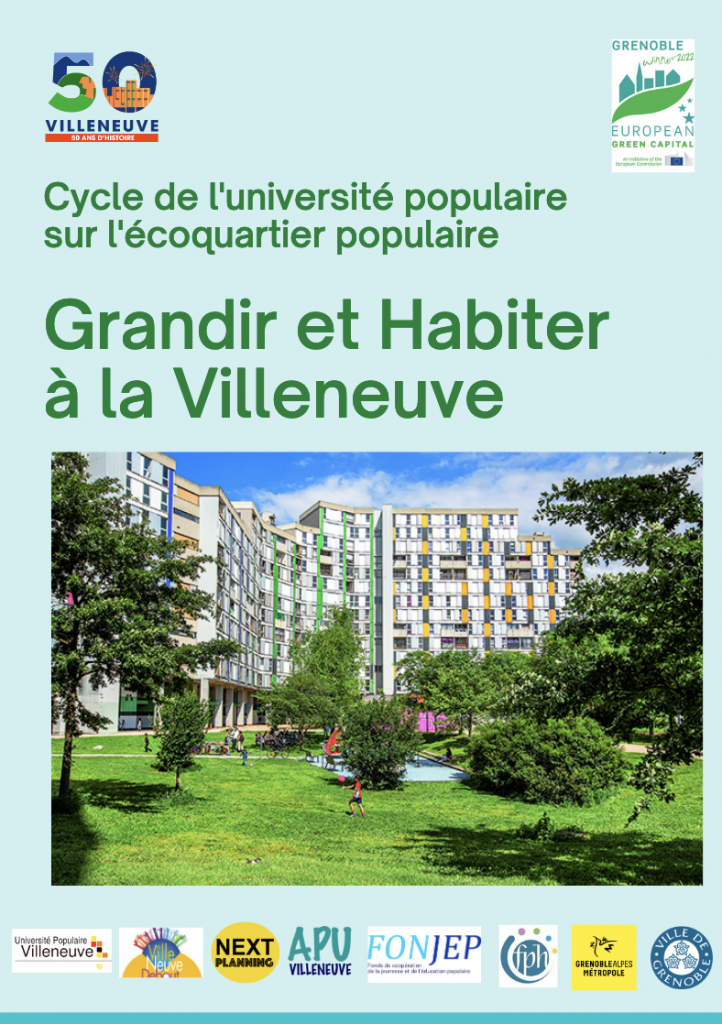
Des habitants et associations de la Villeneuve réunis au sein de l’Université Populaire ont organisé un cycle de rencontres à propos du projet d’écoquartier populaire menée par les institutions dans le cadre du renouvellement urbain. L’objectif est de construire une analyse partagée avec les habitant-es, faire des propositions pour améliorer la vie quotidienne et envisager ensemble l’avenir à la Villeneuve.
L’Université populaire de la Villeneuve est un espace de réflexion et de discussion rassemblant des habitant-es et des associations de la Villeneuve, ouvert à tou-te-s. Cet espace s’inscrit dans les actions menées par le collectif interassociatif Villeneuve Debout. A la suite du demande qui a émergée dans les permanences de l’Atelier Populaire d’Urbanisme (APU) (tous les mercredis de 17h à 19h au Bocal 1) un groupe d’habitant-es et d’associations ont décidé de travailler sur la thématique de l’écoquartier populaire.
D’une part, l’objectif est de mieux comprendre ce que les pouvoirs publics souhaitent faire sur le quartier, et d’autre part, il s’agit de récolter et regrouper les envies et besoins des personnes qui habitent à la Villeneuve pour montrer les points d’opposition et de convergence entre les deux. L’idée est que l’on puisse faire des propositions qui viennent des habitant-es et usager-ères de la Villeneuve. Le projet de renouvellement urbain doit être au service des habitants pour améliorer la vie quotidienne.
Au printemps 2021, une première rencontre de l’Université populaire a permis de décrypter la signification des termes d’“écoquartier” et de “populaire”, avec l’appui de deux chercheurs impliqués dans un projet de recherche-action. Le comité d’animation a ensuite décidé d’aller à la rencontre des habitants pour recueillir leurs avis et propositions.
3 questionnaires ont été élaborés pour récolter les points de vues sur les thématiques qui ressortaient de la première séance : habiter à la Villeneuve, grandir à la Villeneuve et s’adapter au changement climatique à la Villeneuve. L’objectif était de partir des préoccupations quotidiennes pour aborder la question de l’écoquartier populaire. Après avoir recueilli une 50aine de réponses, deux séances de lecture et de discussion autour des réponses ont eu lieu en mai 2022 pour discuter des résultats à partir de la méthodologie de l’enquête conscientisante et de la recherche-action participative.
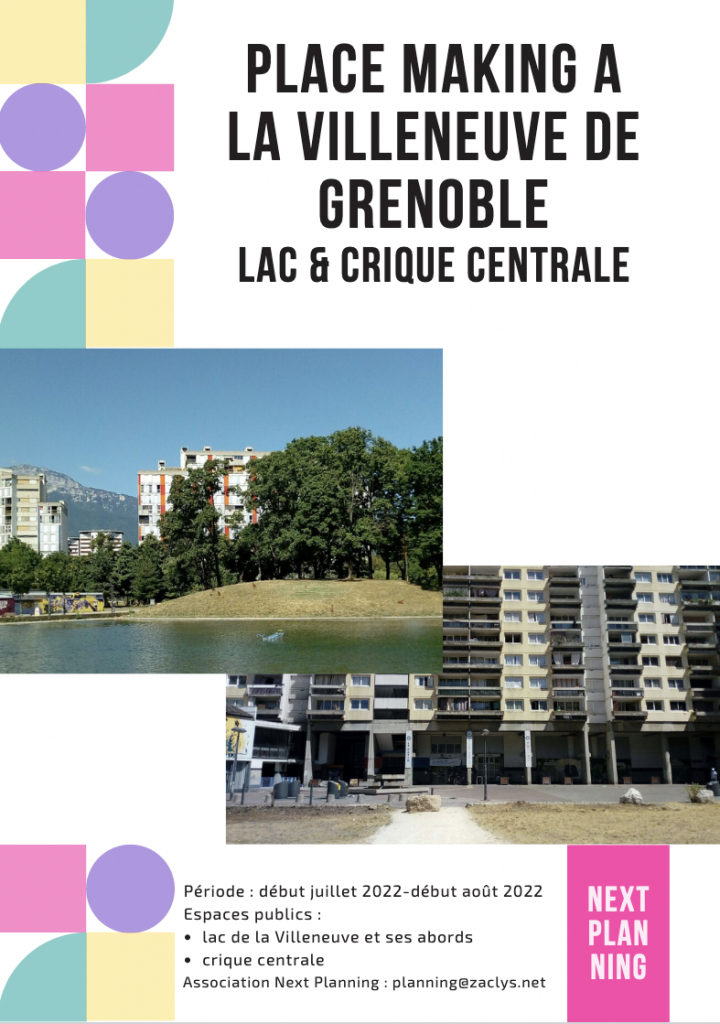
Suite au cycle de l’Université Populaire sur l’écoquartier (printemps 2022), un groupe s’est consacré à la mise en place d’une initiative participative, inspirée des méthodes du placemaking, pour réfléchir à la requalification des espaces publics de la Villeneuve.
Cette initiative s’inscrit dans le contexte de l’arrivée d’une nouvelle équipe de paysagiste pour travailler sur le devenir du parc Jean Verlhac. Une présentation de cette nouvelle équipe a eu lieu le mardi 6 septembre 2022 en salle 150.
Nous avons suivi une démarche inspirée du place making. C’est une théorie qui propose d’aménager, de rénover ou de réhabiliter la ville en partant des façons dont les personnes utilisent les espaces, et des besoins ou envies qu’elles ont. Nous avons récolté la parole de ces habitant·es et usager·ères des lieux sous la forme de petits papiers. Les personnes pouvaient écrire le(s) mot(s) qu’elles voulaient, ou nous le faisions pour elles. Nous avons rencontré une cinquantaine de personnes au total et avons collecté une cinquantaine de mots.
Nous sommes allé·es à la rencontre des personnes qui se trouvaient autour du lac et dans la crique centrale. Nous avons discuté avec elles et leur avons demandé si elles aiment ces endroits, comment elles s’y sentent, ce qu’elles y font, ce qu’elles aimeraient changer. Une synthèse est en cours d’écriture.
Ce travail va se poursuivre dans les prochaines semaines et nous allons travaillé sur d’autres espaces publics. Ces démarches pourront contribuer aux réflexions menés par la nouvelle équipe en charge du devenir du parc de la Villeneuve (agence de paysage HYL choisie notamment pour sa sensibilité à l’histoire de la Villeneuve et à ses qualités patrimoniales).
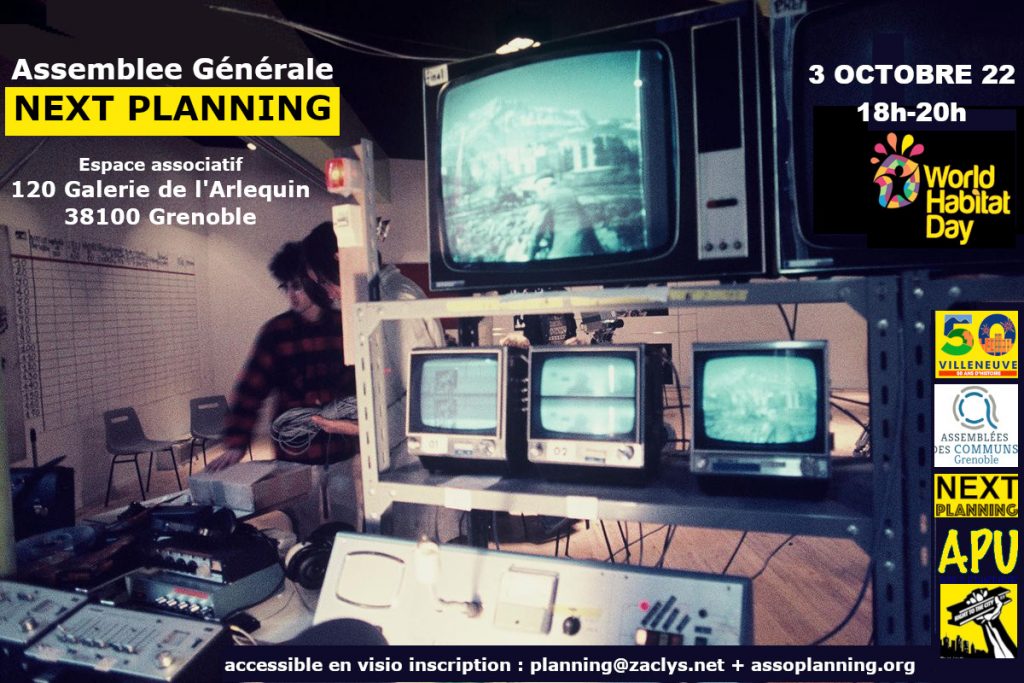
A l’espace associatif du 120 Galerie de l’Arlequin et accessible en visio sur inscription par mail à planning(a)zaclys.net
Présentation du rapport d’activité 2021 et discussion autour des avancées du projet urbain stratégique et démocratique dans le cadre des 50 ans de la Villeneuve (https://50ansvilleneuve.net)
Damien Airault: How did you hear about the École du Magasin? What brought you there?
Corrado Salzano: from Italy and I worked between Turin and Milan, in a few institutions and galleries. Then I moved to Amsterdam and probably got to know a few people at De Appel, so I probably started looking for curatorial schools. There was De Appel, which I couldn’t afford, and the Magasin was free, so the problem was only how to stay in Grenoble, not how to pay for the program.
DA: You were quite old when you entered the Magasin.
CS: Yes, I was 29.
DA: What made you decide to go there? What were your expectations?
CS: Previously, I had worked mainly as a curator assistant or a gallery assistant. I saw that Le Magasin offered the possibility to do a project on your own. You had a framework in which you could build your own project and learn by doing.
DA: Did you graduate in art history?
CS: I graduated not in traditional art history, but in this Italian faculty founded by Umberto Eco. 1 It was a sort of semiology course. The core was semiotics and it was applied to theatre, music, cinema and art. So it was interdisciplinary and you would “pick” your spot. I picked contemporary art. It was not classic art history.
DA: Do you remember your interview in Grenoble?
CS: There was the director of Le Magasin [Yves Aupetitallot], Lore [Gablier], and Tolga [Taluy]. They asked me to prepare an exhibition proposal along with a CV. My proposal was inspired by an exhibition I saw at De Appel, I’m Not Here. An Exhibition Without Francis Alÿs, which took place in April-June 2010.
DA: What was the schedule with your tutor, Fareed Armaly?
CS: He came early on to kick off the year, and then, he came back maybe once a month. In the beginning, there was a kind of “incubation period” so he came for a whole week, and then we were in touch by email. Afterward, he came back once a month. I think he came for the opening of the project as well.
DA: Were there other permanent collaborators or tutors?
CS: No, there was Lore and Fareed.
DA: It was changing almost every year… Was it possible to invite some people of your choice to come to Grenoble?
CS: We had a budget but we used it mainly for traveling, for example, to Switzerland. For sure, we were in touch with students from the art academy in Lyon.
DA: I know you went to Kassel as well.
CS: Yes, as well as to Manifesta in Genk, but it was at the end of the year.
DA: I supposed that to build your project, The Whole World Is Watching, you also met people. But did you also meet people who would give you skills or courses on history, economy, contemporary art, etc.?
CS: No, there was nothing like that.
DA: Wasn’t there anyone to give you things to read or texts to write, exercises or mini-seminars?
CS: Fareed had a little bit of this role. He gave us some inputs, made presentations and, right from the start, we would share and read a text, talk about it, and write something to send back to Fareed. The whole thing was about discussion, and his role was to give us some input.
DA: And this thing about Walter Benjamin comes from you or from Fareed? Because it was also a big reference ten years before.
CS: No. Walter Benjamin was just the first quote we took about technology. I don’t think it came from Fareed.
DA: Did you have contacts with people in the art centre? Did you have to work with the staff, or maybe they had to present their jobs? Did you have friendly relations with them?
CS: Yes, we were in touch with the team.
DA: I am trying to understand what was the “sociality” (in French we say “socialité”) of the students: How did they survive in Grenoble, make friends? Who did they spend their evenings with Have you made any friends, for example with art school students? How did you build a network in Grenoble, if you did at all?
CS: I can only speak about my personal experience. in the evenings, I worked at La Bobine. It’s a club, an associative cultural centre. I was a barman. I got to know a bit about that community and that’s how I was able to support myself financially. As soon as I arrived in Grenoble, I started couchsurfing. I immediately met Arbresha, a Kosovar-French girl, and we became good friends actually. Then I got a house in the centre of the city with flatmates. We were also spending time together with the other colleagues, and met former students of Le Magasin as well. I remember Tolga was around, for instance.
DA: It’s quite interesting because you’re the first student I’ve interviewed who’s had a real job outside Le Magasin while studying. And I know that the city became very expensive at that moment. Ten years earlier, it wasn’t so expensive. Perhaps most of the students had their flats paid for by their parents or had a small grant, or, at some point, weren’t living in Grenoble, which happened a lot. One of the École’s ambitions was to set up a professional network. Have you managed to do that a bit? How were you introduced to this? Did someone say to you “You must meet this important person”? How do you feel about this? Because it’s a very strange thing for me.
CS: For sure, we met people from the local scene. There was this art space at La Bastille as well as a small art centre run by artists, so we met local art venues. We went to Lyon where we met one of the curators of Documenta, Chuz Martinez. We went to Paris and visited the FIAC and La Maison Rouge, which was the art space founded by Albertine’s father.
DA: Let’s speak a bit about your project. Do you remember how the idea of working on Vidéogazette came up?
CS: There were two points of interest. The first was La Villeneuve. It was 2012 and a few years earlier there had been this story about a guy from La Villeneuve who I think had tried to rob a casino and got away, and the police shot him. And in Villeneuve, there was a big riot, people started burning cars. This happened even before the riots in the Paris suburbs. At La Villeneuve, there were many people with a migration background and the Minister of the Interior, Sarkozy, came to Grenoble and gave this speech saying in essence: “I don’t care if you are third or fourth generation immigrants if you don’t deserve French citizenship, we’ll take it away from you.” The press then reacted by describing the Villeneuve as a sort of “crazy ghetto”. Somehow, I was interested in the way the Villeneuve project started as a kind of pragmatic municipal socialism: a place for communal living. It was described this way. What was interesting was to do some justice to this place, to its origin, to the original idea, against this type of media representation. So there was a great fascination with the story of La Villeneuve. It’s also because there are so many places in Europe that were born out of this idea of communal living, with this modernist rationalist architecture, which became problematic over time. That was the first point of interest. The second point concerned Vidéogazette itself. It was a rather striking history, one of the first experiments in local television, in the early 1970s, when there was only state television. It was also one of the first experiments with portable cameras and so on. It was very interesting in itself because it was a group of technicians or activists who basically organised workshops, for instance with kids at school, and their idea was: “We’ll teach you how to use the camera, you’ll make your own programs, then we’ll broadcast it in a shared space during the evening and we’ll discuss important issues for the neighbourhood.” At some point, there was a local cable so it became possible to also broadcast in the department. This was quite striking historically. And in 2012, there were all these movements like Occupy Wall Street, the Indignados in Spain, there was even this big question mark of the Arab Spring. So it was a question of how the new generations were using new technologies, cameras, smartphones, and social media, to organise politically. The local experiment of Vidéogazette resounded with these contemporary events. We wanted to draw this line, this parallel. And of course, we were an international group living in Grenoble and we were interested in how this local history could connect with other international events. Anyway, these were the two main points of interest: the history of La Villeneuve and the history of Vidéogazette itself.
DA: Did you meet everybody? Did you manage to see the videotapes and to show them? If I’m right, you presented an exhibition in the auditorium. Was there a publication or a book about Vidéogazette? You were kind of the first to study this channel!
CS: An exhibition was organised previously at Le Magasin but it had a different focus. 2 It was about Grenoble and the artists who lived there in the past. For example, this exhibition showed Godard in Grenoble during the 1970s. It was also showing a video from Vidéogazette, because one of the school kids who took part in the Vidéogazette’s workshops was Dominique Gonzalez-Foerster. She grew up in La Villeneuve and she was in one of these videos. The exhibition showed it, saying that this has happened, so Vidéogazette was one among many elements. We saw that and decided to focus our project on this history.
DA: Was this exhibition part of the programme of the art centre?
CS: Yes, it may well have been curated by the director, Yves Aupetitallot. Anyway, we basically had the videotapes and we found the local archives in Grenoble: a lot of flyers, leaflets. Vidéogazette lasted a few years, but then the funding was cut so the people who were working there left Grenoble. We managed to get in touch with one of them who was living in Nantes. He was the graphic designer of Vidéogazette. His name was Patrick Di Meglio. This was probably Lore’s masterpiece: she managed to get in touch with him. So we got this amazing archive of posters.
DA: Yes, I’ve seen three interviews with people from Vidéogazette: Denis Requillart, Jean Leclerc and Patrick Di Meglio. It was a small exhibition. I saw that the budget was around 5000 euros.
CS: We did an exhibition and a website.
DA: Did your opening take place during the opening of the Magasin’s main exhibition?
CS: Yes, I think it was an exhibition by Isabelle Cornaro.
DA: What do you think of your exhibition ten years on?
CS: I reread today the things we wrote on the website and I think it was a good project, even if not everything was developed or perfect.
DA: This exhibition also reflects the style of the École, with lots of documents and information. At De Appel, we would say that this is an exhibition of the “pedagogical turn” and it is very symptomatic of this period.
CS: For me, it’s important to provide proper information in the exhibition, so as not to assume that the public knows the context. It’s always important to put something down on paper and give background information, otherwise the exhibition is only aimed at a specialist audience and not a general one. Of course, if there’s too much text, it kills you. I don’t think we needed too much writing with that exhibition. There was a leaflet and we put the written part on the website, so if you wanted to find out more, that was possible, but we didn’t put it all in the exhibition.
DA: I didn’t see that.
CS: Basically, we had a table with a screen on which the website was displayed, and the texts were simply presented online.
DA: How did you build the show? Did you determine tasks, competencies, did you try to separate out all the things that you had to do? How did you organise?
CS: Sarah [Sandler] was an architect by profession, so at a certain point, she took over the scenography and the build-up. Shoghig [Halajian] was very good with planning and communication, while I was a little bit more into the writing part.
DA: How was your relationship with Lore [Gablier]? Was she after you, did she give you deadlines or leave you free? You were also quite old students, all “grown-up adults”, and perhaps you didn’t need anyone to set up your agenda…
CS: She knew all the people in the organisation. She also knew the context because she comes from the region, and of course, she was the one who spoke French, even though I started speaking French at a certain point. For example, she was super important to get in touch with the people from the Vidéogazette and to support us.
DA: This interview is almost finished. Do you have anything to add? How did the École help you in your career?
CS: For me, it was quite an amazing experience, like a project in itself. For the rest, I do not work in the art world right now. I work as a coordinator of events for a fashion brand in Berlin. I organise workshops, seminars, and training. Right after L’École du Magasin, I worked in art for a few years. I did research for the University of Warwick. I was living in Amsterdam, then I went to the UK, then I went to Belgrade where I curated a show, and then Berlin. At a certain point, I stepped out of art. I will never speak badly about the art world but there is a big problem: too many people want to work in art while there are too few jobs, so there’s a lot of exploitation, underpaid, not-paid jobs. For me, the Magasin was an important experience in life.
DA: I see what you mean.
ndt. Corrado Salzano refers to Dams (Department of Art, Music and Entertainment) which was founded at the University of Bologna in 1971. Umberto Eco was one of the first to join the department and was appointed to the chair of Semiotics. ↩
Corrado Salzano refers to the exhibition, Cinéma(s), which was organised in 2006. ↩
***
VIDEOGAZETTE (1973-1976)
Vidéogazette (1973-1976) was a group of activists, technicians and citizens who organised a public access television program in Villeneuve, a neighbourhood located south of Grenoble’s city centre. Through weekly workshops, Vidéogazette members taught the Villeneuve inhabitants how to use audio-visual technology and produce their own television. Informed by a critical vision of industrial cinema and mainstream news media, the group sought to decentralise the flow of information and activate the role of the spectator to one of producer. One of the slogans reproduced on the Vidéogazette flyers was “wherever there is a consumer, there is a producer and a possible creator!” By taking charge of the means of information production, the inhabitants were made aware of their social context and able to play an active role in the local democracy. “Community action through video and communal experience” and a “real labour of representation with the people who are going to watch their broadcast in the evening” were common descriptions of the project. Vidéogazette was the first local television in France and part of a greater social initiative at the time. Under the mayoralty of Hubert Dubedout (1965-83), Grenoble was transformed into a laboratory of pragmatic municipal socialism, with the Villeneuve housing complex taking centre stage. Conceived as a model of co-habitation and communal life, Villeneuve (literally “the new city”) sheltered many militants born out of May ’68, as well as people of different backgrounds including Arab, Spanish and Portuguese immigrants and Latin American refugees. Villeneuve’s community lifestyle meant that inhabitants were willing to leave their front doors open, take care of their neighbours’ children, eat together, and meet every evening in a shared space to discuss social issues. Through state and city funding, Vidéogazette offered different services at Villeneuve’s Audiovisual Centre, including the production of videos, films and posters; rentals of audiovisual equipment for the locals; and studio courses for primary school students and adults to familiarise them with the equipment. Initially located in a school, Vidéogazette’s focus was on children’s education and the promotion of cultural activities. Active participation within the local social context was one of the collective’s top priorities. Learn-by-doing educational workshops allowed both children and adults to produce their own news and entertainment programs, and later broadcast these shows to the community. Screenings were often organised in common spaces such as public yards and the local theatre Espace 600. After the installation of the cabled network in 1973, Vidéogazette started to broadcast the television programs in the neighbourhood apartments. The TV programs created and reinforced a sense of shared identity, promoted transparency within news media and accountability for one’s political and social surrounding conditions. Conceived as a platform for political debate, Agora was the main broadcast program in which inhabitants gathered in a theatre-setting and discussed their opinions on social matters such as unemployment, increases in housing rent, and local factory strikes. Here different immigrant communities were also encouraged to share their local tradition by organising music performances, films, and debates on relevant issues. Some examples include “El Jerida”, a news program in Arabic, and various forums with Chilean refugees discussing the 1973 military coup. In many instances, these events were the first time the local public was exposed to thematics such as the Palestinian conflict and the dictatorships in the Latin American countries. In 1974, the collective founded the Vidéogazette association, inviting all the residents to take part in the decision-making process. Many were invited to contribute content and participate in the production of the programs. Vidéogazette members affixed graphic posters around the neighbourhood and distributed weekly programs in mailboxes in order to advertise their television and keep Villeneuve inhabitants updated. Over the years, the role of the activists increased and the subjects of the programs became more explicitly political. The idea of video as a militant tool is clearly present in a series of posters that depict a group of cameramen lined up like soldiers embracing their cameras as weapons. Among the topics presented during these years, it is worth mentioning contraceptive methods and abortion. Vidéogazette activists organised different debates around these issues, involving doctors from the local family planning association and feminist groups. These activities had a strong political connotation at the time, as abortion was soon legalised in France in 1976. Vidéogazette initially garnered a lot of enthusiasm from the locals, but after a few years only a small number of inhabitants remained actively involved. The commitment implied in collective life was too demanding and tiring for many individuals. Many also claimed that the television programs were hard to follow, and rather preferred the films broadcast on the national television channels. Only a few cultural and political groups proposed the subjects to be broadcast, leading to programs that were soon described as long talks resembling “a radio program with images.” “It’s not of interest” and “it’s just intellectuals’ chattering” were also common responses by the locals. Filmmaker Jean Luc Godard offered another point of criticism, targeting the amateur approach of Vidéogazette: “It’s not production and it’s a false idea of collective activity. They don’t have the means, and if they did, they wouldn’t know what to do with them… Not everyone can become a butcher; not everyone can use a camera […] you need a minimum of training; you have to learn. The slogan ‘freedom of expression’ is, to my mind, a fascist slogan. If necessary, I would prefer to say ‘expression of freedom.’ But freedom is not easily expressed.” Vidéogazette ended in 1976 when the central government did not renew its financial support. In response, the collective organised a conference in Paris and distributed an ironic obituary communicating “the death of the Vidéogazette at the age of 4, due to a well-known disease called the State”. After the end of Vidéogazette, the core members of the association worked for the municipality taking charge of education and cultural activities, realising exhibitions and debates around diverse topics such as housing, environment and employment issues. In 1981, the right-wing won the local election and funding for the activities of the former Vidéogazette group was cut. As a result, many of the members moved out of Grenoble. The Vidéogazette experience belongs to the context of post-68 experimentations with video and television that reacted to the State’s control over information. This was part of a broader initiative to decentralise cultural production and redistribute governmental power to regional administrations. Until 1974 television and radio broadcasting was under the monopoly of the ORTF (Office of Radiodiffusion-Télévision Française), a state-run association that constituted five radio and two television channels in France. In 1968, strikes at the ORTF offices surfaced outrage against the government’s control and censorship of political information. According to Yves Guéna, the Minister of Information at the time, “General de Gaulle could not tolerate a situation in which television was not at the service of his policies”. The ORTF broke up in 1974 when Giscard d’Estaing took the presidential seat. d’Estaing implemented a radical reorganisation of broadcasting networks in France, dividing the ORTF’s unitary structure into seven separate companies with their own agendas and programmation. This mandate provided a significant break from the previous presidential administrations and a symbolic gesture to show d’Estaing’s liberal stance on media. Despite pressures to introduce commercial alternatives to the media sector, d’Estaing maintained the State monolopy over television. Only a minority of the French public received programs outside of the three French state-run channels—Villeneuve residents were part of this select group. Commercial channels were later introduced to France in 1981 when d’Estaing’s presidential term ended. — Recently in 2010, the neighbourhood of Villeneuve drew in public attention when city riots broke out in response to the death of Karim Boudouda, a suspected armed robber caught in a police chase, and outrage against the representation of the city in news reports on the case. These events led President Sarkozy to pronounce the ‘Grenoble Speech’ in Villeneuve, in which he focused on issues around immigration and prejudice in the city. The Villeneuve apartments will soon set the stage for a 2012 fictional television series, called Ville9. The producers plan to incorporate excerpts from the Vidéogazette programs in the shows. The Villeneuve neighbourhood is also scheduled for major 2013-14 renovations. The plan includes the demolition of an entire tower of apartment units, formerly home to the Vidéogazette studios. Olivier Clerc. “Ghetto ou paradise? Les balbutiements de la Vidéogazette.” Le Dauphine Libere, 1 September 1975. Both positive and critical feedback from residents was often included on the Vidéogazette posters in a section entitled “Feedback.” They also broadcast television interviews in which residents offered their opinion on the shows. Jean-Luc Godard moved to Grenoble in the mid 1970’s, planning to remodel a video studio and experiment with alternative methods of production and distribution (primarily by passing out videotapes to networks of friends and associates). Here he worked with Jean-Pierre Beauviala, the inventor of the first lightweight 16mm camera and the hand-held video camera, “La Paluche”, and started to incorporate television into his practice. Grenoble set the stage for various works, including the film Numero Deux (1975) and the television series Six fois Deux (1976) and France-tour-détour-deux-enfants (1977-78). Yves Guéna, Le Temps des certitudes, Paris, Flammarion, 1982, p. 280. Speaking to local leaders of Grenoble, President Sarkozy claimed that crime was driven by permissiveness and uncontrolled immigration, and that French nationality should be stripped from any person of foreign origin who voluntarily tries to take the life of a policeman, gendarme, or other figure of public authority.
Nous avons le plaisir d’annoncer que la 3ème caravane pour le droit à l’alimentation démarre la semaine prochaine du 13 juin au 2 Juillet 2022 ! Pendant les quinze prochains jours, vous êtes invités à participer à des rencontres, ateliers, des repas pour réfléchir et agir ensemble pour le Droit à l’Alimentation !
✅ Mardi 22 Juin de 14h30 : Permanence des comités d’habitants pour discuter ensemble du bilan des caddies solidaires (au Bocal 1 97 Galerie de l’Arlequin 38000 Grenoble)
✅ Dimanche 26 Juin de 9h à 22h : Atelier cuisine et dégustations pour la fête de quartier organisée à l’occasion des 50 ans de la Villeneuve (dans le parc Jean Verhlac, 38000 Grenoble)
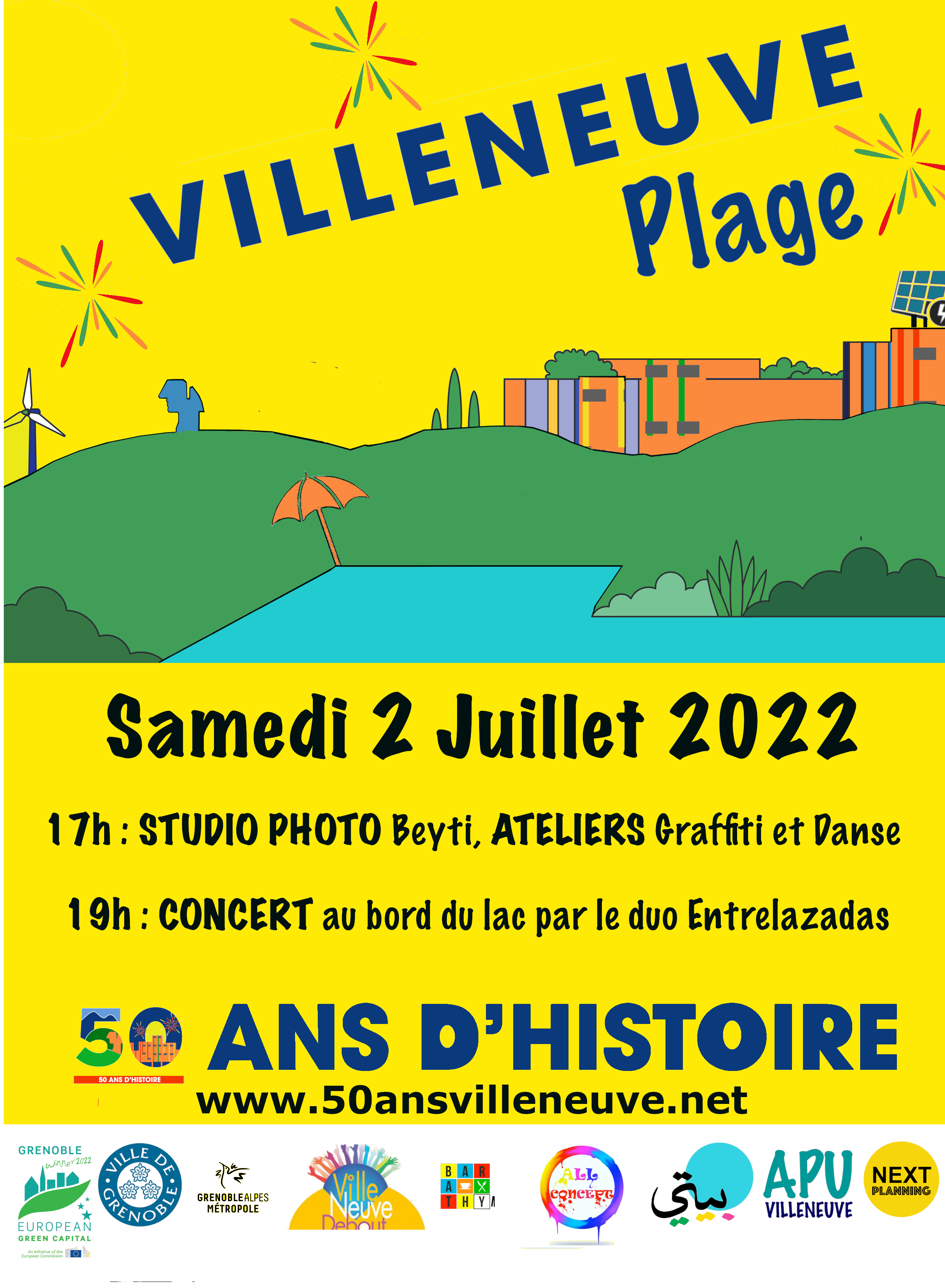
✅ Samedi 2 Juillet à 16h à 21h : Pour fêter ensemble le final de cette 3ème Caravane pour le Droit à l’Alimentation, participer à une dégustation organisée à l’occasion Villeneuve Plage (dans le parc Jean Verhlac, 38000 Grenoble)
Partenaires de la caravane pour le droit à l’alimentation: des comités d’habitants de la Villeneuve de Grenoble et d’Echirolles, Assemblée des Communs, Conseil Citoyen Essarts Surieux, Next Planning, Villeneuve Debout, Le Barathym, Cuisines Sans Frontières, les achats groupés des Essarts, le Lisra, l’UITC (…)
Si vous souhaitez participer, ces initiatives sont ouverte à tou-tes ! Pour toutes questions, infos, propositions : villeneuve.numerique(a)zaclys.net
Villeneuve Plage est un évènement qui se déroule chaque été au sein du Parc Jean Verlhac de la Villeneuve de Grenoble qui consiste à se réapproprier l’espace public à travers des activités culturelles, éducatives, festives et conviviales.
Cet évènement initié par l’Atelier Populaire d’urbanisme (APU) est porté par le collectif inter associatif Villeneuve Debout. Il est rendu possible grâce à une démarche participative favorisant l’implication des partenaires, habitants et associations pour organiser des activités en soirée et week-ends qui s’adressent à tous les publics mixtes et intergénérationnelles.
Cette année, Villeneuve Plage sera l’occasion de fêter les 50 ans de la Villeneuve et participe à la démarche Grenoble Capitale Verte en respectant la charte éco évènement.
Cette initiative est ouvert à tou-t-es, Si vous souhaitez participer, vous pouvez nous contacter à planning(a)zaclys.net et contact@villeneuvedebout.org
La dernière rencontre a rassemblé le 7 mars l’AITEC, Next Planning, Pas Sans Nous, HALEM et Un Centre-Ville Pour Tous. Cette reprise de contact a permis de mesurer l’avancement et le renouvellement des initiatives.
Nous agissons, participons à ou accompagnons, dans divers territoires, des actions pour l’accès au droit au logement et au droit à la ville, des luttes contre la gentrification, les discriminations, les précarités et autres vulnérabilités & marginalisation ou exclusion (…). Nous proposons de faire le point collectivement sur les avancées de ces démarches communes et d’esquisser des pistes pour aller plus loin. La question centrale est bien centrée sur la coproduction de connaissances et de stratégies : comment nourrit-elle nos actions & nos campagnes de plaidoyer ?
Dans cette perspective nous proposons que les membres de ce petit groupe d’initiative sollicitent d’autres collectifs de leur connaissance, sur la base de l’intérêt qu’ils peuvent avoir à partager leurs expériences dans le sens des synergies à développer entre les luttes de terrain et des chercheur.e.s et/ou expert.e.s citoyen.nes.
La prochaine rencontre aura lieu le vendredi 17 juin 2022 – de 17:00 à 20h en préparation d’une journée ou demi-journée de séminaire au dernier trimestre 2022.
Plus d’infos : planning(a)zaclys.net
Le groupe de travail (l’AITEC, Next Planning, Pas Sans Nous, HALEM et Un Centre-Ville Pour Tous)